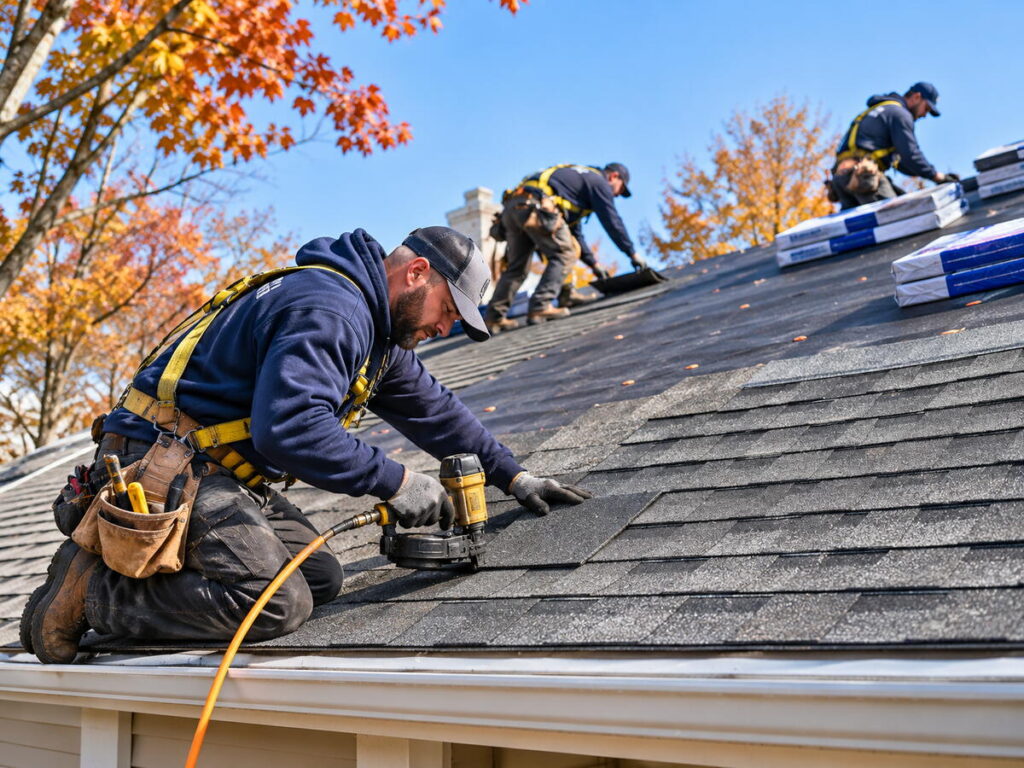
By Steve Nickerson, Estimator/Principal, Rylee Ann Roofing
Yes, you can replace a roof in November or December in Bucks County. A winter roof replacement holds up well when the crew follows the shingle maker’s cold-weather steps, works only on dry, frost-free days, and plans around the forecast.
If your roof started leaking after the fall storms, someone may have told you to wait until spring. You might also worry that shingles put down in the cold won’t seal. Meanwhile, the stain on your ceiling keeps growing, and you’re wondering how many more storms the old roof can take.
Those are fair concerns. At Rylee Ann Roofing, our team brings 30 years of experience replacing roofs in Fairless Hills, Levittown, Yardley, and across Bucks County in every season. Below, we explain what cold weather really does to a new roof, how to tell if yours can wait, and how a late-season replacement gets done right.
What You’ll Learn
- Why Does Cold Weather Matter for a New Roof?
- The Real Causes Behind Winter Roof Replacement Problems
- How to Tell If Your Roof Can Wait Until Spring
- Winter Roof Replacement Options in Bucks County
- Why Bucks County Homeowners Choose Rylee Ann Roofing
- Frequently Asked Questions
- Next Steps
Why Does Cold Weather Matter for a New Roof?
Asphalt shingles are made to bond together with heat. Each shingle has a strip of sealant that softens in the sun and glues it to the shingle below. When the weather stays cold, that strip may not activate right away, and the shingles themselves get stiff.
Homeowners usually face this question when:
- An aging roof starts leaking after October and November rain
- A storm damage insurance claim gets approved late in the year
- A contractor says the job has to wait until April
Here in Bucks County, the change comes fast. At Trenton-Mercer Airport, just across the Delaware River, the average high drops from about 55°F in November to about 45°F in December, with lows near or below freezing. That is right around the point where shingle makers ask for extra installation steps.
Why it matters: putting off a roof you need is not free. A failing roof that sits through a winter of freeze-thaw cycles and Nor’easters can turn one project into several, including roofing, drywall, insulation, and sometimes mold cleanup.
The Real Causes Behind Winter Roof Replacement Problems
When a cold-weather roof fails, the season is rarely the real problem. It usually comes down to one of these four things.
1. The Shingle Sealant Needs Heat
Owens Corning, the manufacturer we are certified with, calls for extra care when air and roof surface temperatures are at or below 40°F. Its sealant strip is activated by direct sun. How fast it seals depends on roof slope, which way the roof faces, and how warm the days are after the job. A north-facing roof in Newtown may not fully seal until a warm stretch. Until then, strong wind can lift loose shingles.
That is why the manufacturer calls for hand sealing in cold weather. Hand sealing means placing small, measured dabs of roof cement under the shingles. Too little does nothing. Too much can cause the shingles to blister.
2. Cold Shingles Crack More Easily
Think of a shingle like a stick of gum. Warm, it bends. Cold, it snaps. Cold shingles can crack when bent over a ridge or into a valley, and they take longer to lay flat. Nails driven into a stiff shingle are also more likely to go too deep.
3. Short Days and Frosty Mornings
In late December, our area gets only about nine and a half hours of daylight. Frost and dew can sit on the roof deck until mid-morning. Underlayment and shingles should never go down over wet, icy, or snowy wood. A good crew plans a shorter workday and only tears off what it can fully cover the same day.
4. Waiting Has Its Own Risks
In our experience, a roof that is leaking in November is worse by March. Bucks County freeze-thaw cycles push water into small cracks, freeze, and widen them. Many of the 1950s homes in Levittown and Fairless Hills have tight attics, which makes ice dams more likely along the eaves. Add a few Nor’easters with wind-driven rain, and small leaks become ceiling damage.
How to Tell If Your Roof Can Wait Until Spring
Not every roof needs to be replaced before winter. Use this quick check from inside the house and from the ground:
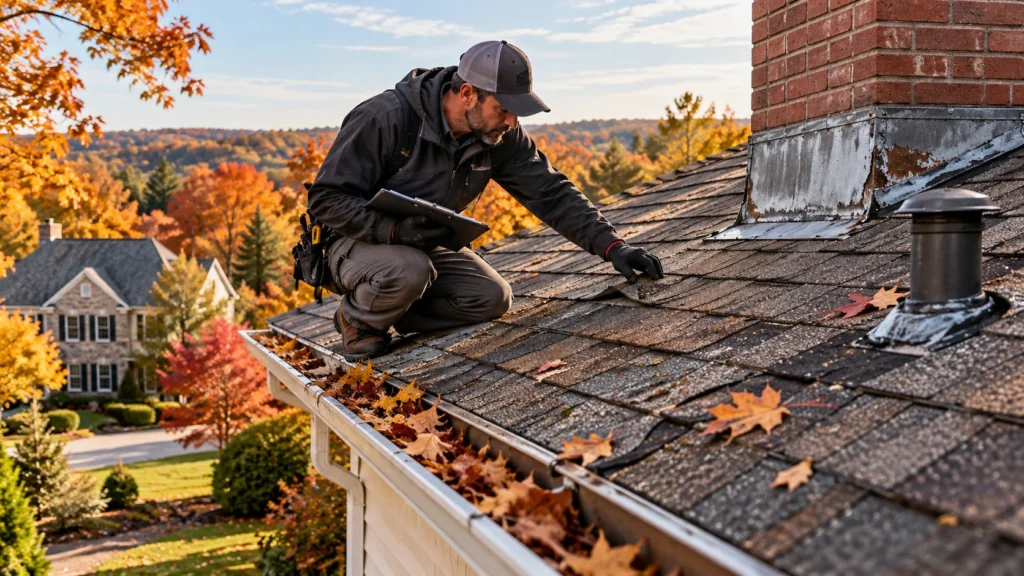
- Check the attic after rain. Use a flashlight to look for dark stains on the wood, damp insulation, or daylight through the boards.
- Look at your ceilings and walls. Pay close attention around chimneys, skylights, and bathroom vents.
- Scan the roof from the ground. Binoculars help. Look for missing, curled, or cracked shingles.
- Look in the gutters. Heavy piles of shingle granules mean the roof is wearing out.
- Know the roof’s age. Many asphalt roofs in our area start showing their age after about 20 years.
Call right away if you see: an active drip, a sagging section, soaked insulation, or a large patch of missing shingles after a storm. These usually can’t wait for spring.
Please don’t climb up yourself. A cold roof with a thin layer of frost is very slippery, even when it looks dry.
If your roof passes this check, our guide on why fall is the best time to replace your roof can help you plan ahead for next season.
Winter Roof Replacement Options in Bucks County
What You Can Do Right Now
- Catch drips with a bucket and move furniture and boxes away from the leak.
- Take dated photos of any damage for your insurance company.
- Make sure gutters are clear so melting snow can drain. If you can’t reach them safely, call a pro.
- Skip the DIY tarp on a cold roof. It is one of the most common ways homeowners get hurt.
What a Professional Winter Roof Replacement Includes
At Rylee Ann Roofing, every late-season residential roof replacement follows a cold-weather plan:
- Forecast planning. We book install days in the warmest, driest stretch available and reschedule rather than force a bad day.
- Careful material handling. Bundles are kept off frozen ground, handled gently, and never dropped or bent.
- Hand sealing where it counts. We follow Owens Corning’s cold-weather steps, including hand sealing shingles along the full roof perimeter, where wind uplift hits first.
- Same-day dry-in. We only remove as much old roof as we can cover before dark.
- Ice and water protection. A self-sticking membrane goes along the eaves and in the valleys, where ice dams and winter leaks start.
- Owner on site. Steve is on the job to check the details that matter most in the cold.
Most home roof replacements take one to three days. In November and December, we often build in an extra weather day. For a look at what drives price, see our roof replacement cost guide for Bucks County.
When a Temporary Repair Makes More Sense
If a deep cold snap or snow is locked in, a professional temporary repair can protect your home until the next good window. Our storm damage and active leak team handles these calls.
Why Professional Work Matters More in Winter
Shingle warranties expect the installer to follow the written instructions, including cold-weather steps. Every residential asphalt shingle roof we install is also backed by our 10-year leak-free workmanship warranty, compared with the 2 to 7 years common in our industry.
Why Bucks County Homeowners Choose Rylee Ann Roofing
Rylee Ann Roofing is a family-owned roofing contractor based at 438 S Oxford Valley Rd in Fairless Hills. We are not a general construction company. Roofing is all we do.
- 30 years of roofing experience and an owner on site for every job
- Owens Corning Certified Installer with factory-trained crews
- Licensed in Pennsylvania (HIC #139247) and New Jersey (#13VH10032900)
- 10-year leak-free workmanship warranty and a 24-hour issue resolution policy
- 5-star Google rating with 50+ reviews and a 2022 Nextdoor Neighborhood Favorite
- Proud supporter of the Levittown-Fairless Rescue Squad, Tullytown Fire Company, Edgeley Fire Company, and Bristol Borough Hall
We know how winter hits homes in Bristol, Langhorne, Morrisville, and Falls Township, and we plan every late-season job around it.
Frequently Asked Questions
Can you replace a roof in December in Bucks County PA?
Yes. Roofs are replaced in Bucks County all winter long. The key is choosing dry, frost-free days and following the shingle maker’s cold-weather steps, such as hand sealing and careful handling. A good contractor will also reschedule if snow, ice, or a deep freeze makes the day unsafe or the work unreliable.
What is the lowest temperature for installing shingles?
There is no single cutoff in the building code. Owens Corning calls for extra steps once air and roof surface temperatures reach 40°F or below. Below that, we decide day by day based on sun, wind, roof direction, and whether the deck is dry. Some days we install. Some days we wait.
Will a new roof seal if it’s installed in cold weather?
It will seal, but maybe not right away. The sealant strip needs sun and warmth to activate, so it may finish bonding during the first warm stretch. Hand sealing holds the shingles in place until then, which is why it matters so much on late-season jobs.
Does a winter roof replacement cost more in Bucks County?
Usually not by much. Price mostly depends on roof size, pitch, the number of layers to remove, and the shingle line you pick. Hand sealing adds some labor. We provide free written estimates with no obligation and offer financing through Wells Fargo.
How long does a roof replacement take in November or December?
Most home roof replacements take one to three days of work. In late fall and winter, shorter days and weather can stretch that out, so we often plan an extra day. We plan each day so no part of the roof is left open overnight.
Should I wait until spring to replace my roof?
If your roof is old but dry, waiting can make sense. If it is leaking, losing shingles, or letting water into the attic, waiting usually costs more. A free Roofing Report Card from Rylee Ann Roofing will tell you whether a repair can get you to spring.
Do you replace roofs in New Jersey during the winter?
Yes. We work through the winter in Mercer County and Burlington County, NJ, including Pennington and Ewing Township, as well as Lehigh County, PA. The same cold-weather installation steps apply on both sides of the Delaware River.
Next Steps
- You can replace a roof in November or December when cold-weather steps are followed.
- Shingle sealant needs warmth, so hand sealing protects the roof until it bonds.
- A leaking roof usually gets worse over a Bucks County winter.
- An old but dry roof may be able to wait. A professional look will tell you.
Not sure your roof will make it to spring? Call Rylee Ann Roofing at 833-691-7663 (833-MY1-ROOF) or request a free estimate online. We’ll check your roof and give you a straight answer with no obligation. You can also ask for a free Roofing Report Card, and financing through Wells Fargo is available.
Hours: Monday to Friday, 7am to 5pm, and Saturday, 7am to 12pm. We serve Bucks County and Lehigh County, PA, and Mercer County and Burlington County, NJ.
About the Author
Steve Nickerson is the Estimator and Principal of Rylee Ann Roofing in Fairless Hills, PA. He brings 30 years of experience in residential and commercial roofing, with a focus on storm damage assessment and finding hard-to-trace leaks. Steve is an Owens Corning Certified Installer, licensed in Pennsylvania and New Jersey, and on site for every Rylee Ann Roofing job. Since 2016, he and his family have served homeowners and businesses across Bucks County and the surrounding area.