What You’ll Learn
- How Long Does a Roof Actually Last?
- Why Bucks County Roofs Age Faster Than the National Average
- Signs of an Aging Roof You Shouldn’t Ignore
- How to Extend Your Roof Lifespan — Starting Today
- Why Bucks County Homeowners Choose Rylee Ann Roofing
- Frequently Asked Questions
- Next Steps
You were told your roof would last 25 or 30 years. So why is it showing serious wear at 15? If you’re staring at curling shingles, finding granules in your gutters, or noticing dark streaks spreading across your roofline, you’re not imagining things — and you’re definitely not alone. Bucks County homeowners deal with this disconnect all the time, and the frustration is real. You budget for decades of protection and end up facing a major decision years ahead of schedule. In my 30 years working with homeowners across Bucks County, I’ve seen this pattern play out hundreds of times. The good news is that once you understand why your roof lifespan is shorter than expected, there are practical steps you can take to slow down the clock and get more life out of your investment. — Steve Nickerson, Estimator/Principal, Rylee Ann Roofing
How Long Does a Roof Actually Last?
Most asphalt shingle roofs are marketed with a 20- to 30-year lifespan. Architectural shingles — the most common type installed on Bucks County homes — typically carry a manufacturer warranty in that range. But here’s what the brochure doesn’t tell you: that number assumes ideal conditions. Moderate climate, proper ventilation, professional installation, and consistent maintenance.
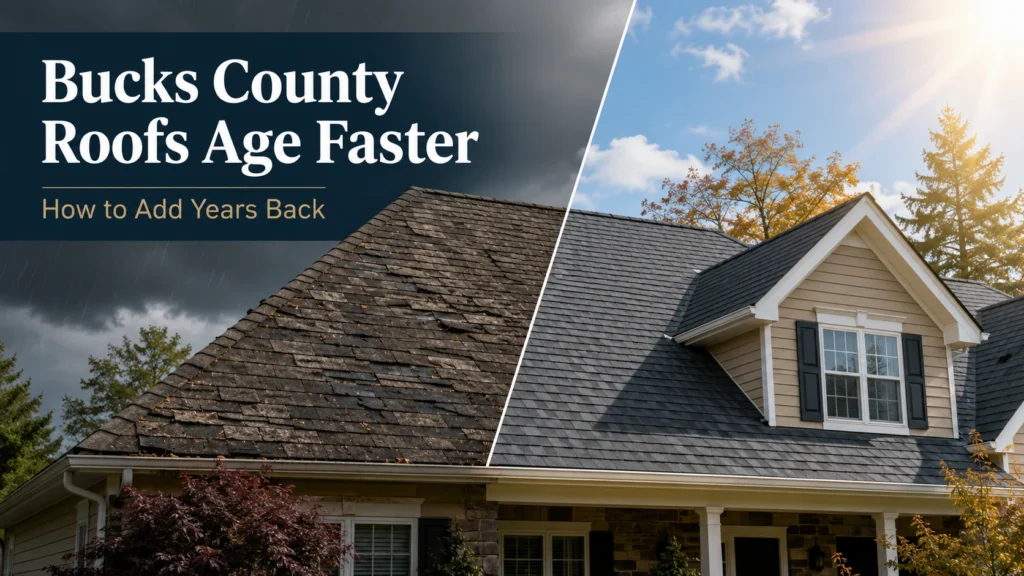
Bucks County doesn’t offer ideal conditions. Between Nor’easters, freeze-thaw cycles, humid summers, and storm-driven wind and hail, your roof takes a beating that roofs in milder climates simply don’t face. The result? Many Bucks County homeowners see meaningful aging and performance issues well before that warranty clock runs out.
Common signs of premature aging include:
- Shingles that are curling, buckling, or losing their shape
- Granule loss visible in gutters or at the base of downspouts
- Dark streaks or moss growth across the roof surface
- Flashing that has separated from chimneys, vents, or skylights
- Daylight visible through the attic decking, or sagging sections along the roofline
If your roof is between 12 and 20 years old and you’re noticing any of these, the aging process is already underway.
Why Bucks County Roofs Age Faster Than the National Average
Freeze-Thaw Cycling Does Cumulative Damage
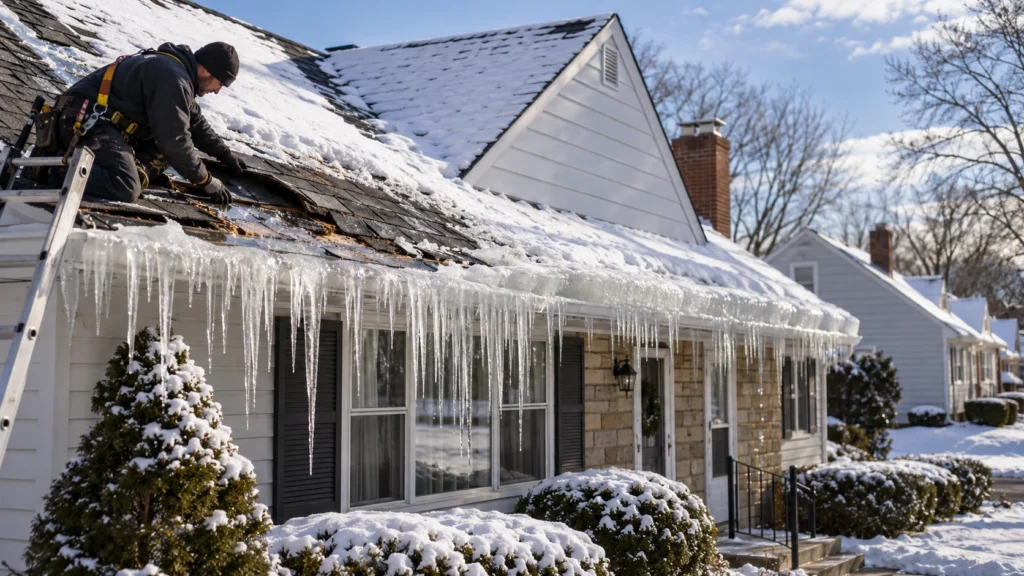
Bucks County winters don’t stay consistently cold. Temperatures swing above and below freezing repeatedly throughout the season, and each cycle does real work on your roof. Water seeps into tiny cracks in shingles and flashing, freezes, expands, then thaws and contracts. Over a single winter, your roof can go through dozens of these cycles. Each one widens gaps, loosens seals, and creates pathways for moisture to reach the underlayment and decking beneath. Most homeowners never see this damage from the ground — but it compounds year after year.
Heat and Humidity Accelerate Shingle Breakdown
Summers in Bucks County bring sustained heat and humidity that most people underestimate. Attic temperatures can climb dramatically when ventilation is inadequate, essentially baking your shingles from the underside while the sun works on them from above. This dual-sided thermal stress dries out the asphalt binder that holds shingles together and accelerates granule loss. Once granules start shedding, shingles lose their UV protection and the aging cycle speeds up even further. Humid conditions also promote algae and moss growth, which trap moisture against the roof surface and contribute to material degradation over time.
Storm Exposure and Wind-Driven Debris
Bucks County sits in a corridor that catches Nor’easters, summer thunderstorms, and occasional tropical weather remnants. High winds don’t have to tear shingles off to cause damage — they can lift edges, break the adhesive seal strip, and allow water infiltration that goes undetected for months. Hail doesn’t need to be golf-ball sized to compromise your roof either. Even small hail impacts bruise shingles, cracking the surface and accelerating granule loss in ways that only show up during a close inspection.
Improper Ventilation and Original Installation Issues
This is the cause I see most often, and it’s the one homeowners have the least visibility into. If your attic doesn’t have balanced intake and exhaust ventilation, heat and moisture build up under the roof deck. That trapped moisture leads to wood rot, mold, and premature shingle failure from the inside out. We’ve inspected roofs in Levittown, Fairless Hills, and Newtown where the shingles looked passable from the street but the decking underneath was soft and deteriorating — all because the original ventilation was undersized or blocked. Poor installation practices compound this. Shingles nailed too high, inadequate underlayment, or flashing shortcuts can cut years off your roof lifespan before weather even enters the equation.
Signs of an Aging Roof You Shouldn’t Ignore
Knowing what to look for can help you catch problems early, before a minor issue becomes a five-figure restoration. Here’s a simple self-assessment you can do from the ground and attic:
- Check your gutters. Excessive granules — especially dark, sand-like material — indicate your shingles are shedding their protective layer.
- Look at the roofline from the street. Wavy, sagging, or uneven sections suggest structural issues or decking deterioration underneath.
- Inspect shingle edges. Curling, cracking, or shingles that appear to be lifting at the corners mean the adhesive seal has failed.
- Check your attic. Look for daylight coming through the roof boards, damp insulation, dark stains on the wood, or any signs of moisture.
- Examine flashing areas. Around chimneys, skylights, vents, and where the roof meets a wall — separated or corroded flashing is one of the most common leak sources we find during inspections.
When to call a professional: If you notice more than one of these signs, or if your roof is over 15 years old and has never been professionally inspected, it’s time for an expert assessment. Some of these issues are correctable with targeted repairs. Others signal that replacement is the more cost-effective path forward.
How to Extend Your Roof Lifespan — Starting Today
What You Can Do as a Homeowner
Not every roof lifespan issue requires a contractor. Start with these:
- Keep gutters clean. Clogged gutters cause water to back up under shingles at the eave, accelerating rot and ice dam formation in winter.
- Trim overhanging branches. Branches that scrape the roof surface strip granules and drop debris that traps moisture.
- Ensure attic ventilation is clear. Check that soffit vents aren’t blocked by insulation and that ridge or exhaust vents are unobstructed.
- Remove moss and algae promptly. These organisms hold moisture against your shingles and accelerate material breakdown. Avoid pressure washing, which causes more damage than it prevents.
When Professional Intervention Adds Years
For issues beyond basic maintenance, a professional roof inspection is the single best investment you can make to extend your roof lifespan. At Rylee Ann Roofing, our inspections cover every component of the roofing system — not just what’s visible from the ground. We check flashing integrity, ventilation balance, underlayment condition, and decking soundness.
Based on what we find, solutions can range from targeted repairs — replacing damaged flashing, resealing vulnerable areas, correcting ventilation deficiencies — to a full replacement when repairs would only delay the inevitable.
A professional assessment also establishes a documented baseline, so you can track your roof’s condition over time and make informed decisions rather than reacting to emergencies.
Every residential asphalt shingle installation by Rylee Ann Roofing is backed by our 10-year leak-free workmanship warranty — well beyond the industry standard of two to seven years. We use Owens Corning certified materials installed by factory-trained crews, because material quality and installation quality are the two factors that have the greatest impact on how long a roof actually lasts.
Why Bucks County Homeowners Choose Rylee Ann Roofing
Rylee Ann Roofing has been serving Bucks County since 2016, and I bring 30 years of industry experience to every project. We are a trade-specific roofing contractor — roofing is all we do, and every member of our team is a roofing specialist. I’m personally onsite every job, from initial inspection through final walkthrough, because I believe the owner’s presence is the best quality control there is.
We hold active licenses in Pennsylvania (HIC #139247) and New Jersey (HIC #13VH10032900), maintain a 5-star Google rating with 50+ reviews, and were named a Nextdoor Neighborhood Favorite in 2022. Our commitment to Bucks County extends beyond roofing — we’re proud supporters of the Levittown-Fairless Rescue Squad, Tullytown Fire Company, Edgeley Fire Company, and Bristol Borough Hall.
If an issue arises during or after your project, Rylee Ann Roofing addresses it within 24 hours. That’s a company policy, not a suggestion.
Frequently Asked Questions
How long does a roof last in Bucks County PA? Most asphalt shingle roofs in Bucks County last between 15 and 25 years depending on installation quality, ventilation, and maintenance. The freeze-thaw cycling and storm exposure in our region typically shorten lifespan compared to manufacturer estimates, which assume milder conditions.
What are the first signs of an aging roof? The earliest indicators are granule accumulation in your gutters, shingles that are starting to curl at the edges, and dark streaks from algae growth. These signs often appear years before a leak develops, which is why catching them early matters.
Can I extend my roof lifespan without replacing it? Yes, in many cases. Keeping gutters clean, maintaining proper attic ventilation, trimming overhanging branches, and scheduling professional inspections every few years can add meaningful life to your existing roof and help you avoid premature replacement.
How often should I have my roof inspected in Bucks County? We recommend a professional inspection every three to five years, and always after a significant storm. Bucks County’s weather patterns — Nor’easters, heavy thunderstorms, freeze-thaw cycles — create conditions that can cause hidden damage a ground-level visual check won’t reveal.
Does attic ventilation really affect how long a roof lasts? Absolutely. Inadequate ventilation traps heat and moisture under the roof deck, which deteriorates shingles from underneath and promotes wood rot. We frequently find that ventilation problems are the primary driver of premature roof aging in Bucks County homes.
What does Rylee Ann Roofing’s 10-year warranty cover? Our 10-year leak-free workmanship warranty covers the labor and installation quality on every residential asphalt shingle roof we install. If your roof develops a leak related to our workmanship within that period, we address it at no cost — typically within 24 hours.
How much does it cost to repair an aging roof vs. replacing it? This depends entirely on the scope of damage. Targeted repairs to flashing, ventilation, or isolated shingle sections are significantly less than a full replacement. A professional inspection is the best way to determine which approach makes financial sense for your specific situation.
When is it too late to repair and time to replace? When damage extends to the decking or underlayment, when multiple areas of the roof are failing simultaneously, or when repair costs would approach a significant percentage of replacement cost, a new roof is usually the smarter investment. We’ll always give you an honest recommendation.
Next Steps
If your Bucks County roof is showing signs of aging — or if it’s been more than a few years since anyone took a close look — here’s what to do:
- Schedule a free inspection. We’ll assess every component of your roofing system and give you an honest picture of where things stand.
- Get a no-obligation estimate. Whether you need targeted repairs or a full replacement, we’ll lay out your options with clear pricing.
- Ask about our free Roofing Report Card. It’s the fastest way to determine your roof’s current condition and remaining useful life.
Call Rylee Ann Roofing at 833-691-7663 or request your free estimate online. We respond within 24 hours and serve all of Bucks County PA, Lehigh County PA, Mercer County NJ, and Burlington County NJ. Hours: Mon–Fri 7am–5pm, Sat 7am–12pm.
About the Author
Steve Nickerson is the Estimator and Principal at Rylee Ann Roofing, bringing 30 years of hands-on experience in residential and commercial roofing to every project. A licensed contractor in Pennsylvania (HIC #139247) and New Jersey (HIC #13VH10032900) and an Owens Corning Certified Installer, Steve is personally onsite every job — from inspection through final walkthrough. Rylee Ann Roofing has served the Bucks County community since 2016.