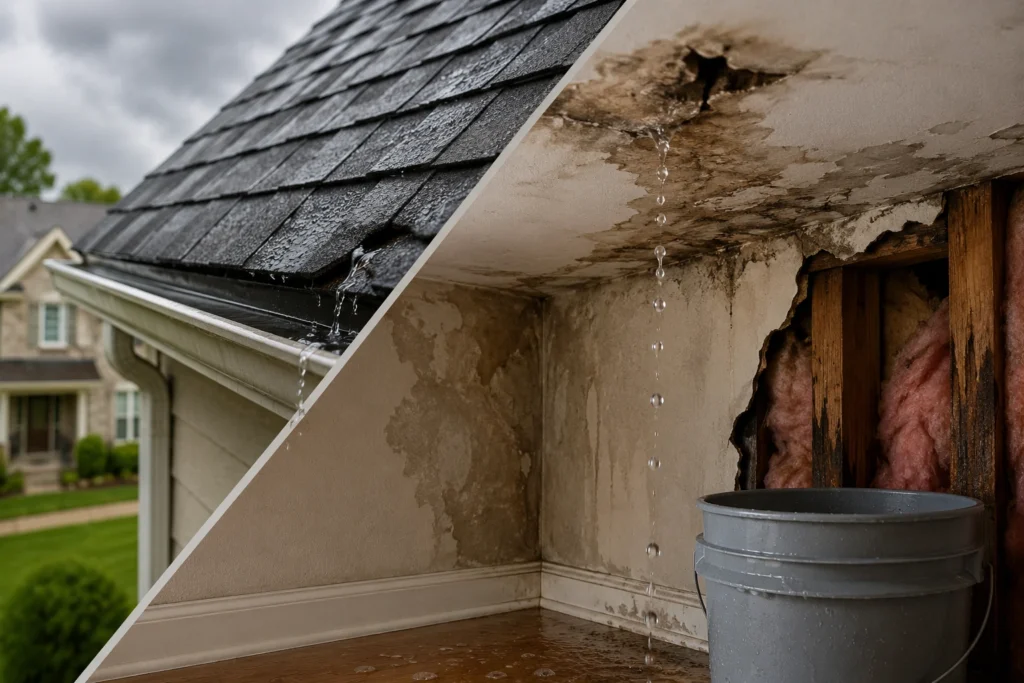
You spotted it weeks ago. A faint brown ring on the ceiling, a little softness in the drywall, maybe a musty smell in the upstairs closet that wasn’t there before. It’s small. It’s not dripping. So you told yourself you’d deal with it later — after the holidays, after the next paycheck, after the weather calms down.
I get it. A small roof leak doesn’t feel like an emergency. But in my 30 years working with Bucks County homeowners, I’ve learned that the words “small leak” and “cheap fix” almost never stay together for long. The trouble isn’t the water you can see. It’s the slow, quiet damage happening above the ceiling where you can’t.
This article walks through exactly what happens when a small roof leak goes ignored, why it spreads the way it does, and what it actually costs you to wait — not in scary dollar figures, but in the very real chain of problems one little leak sets off.
What You’ll Learn
- What Counts as a “Small” Roof Leak?
- The Real Causes Behind a Small Leak That Won’t Quit
- How to Tell If Your Leak Is Already Spreading
- The True Cost Breakdown: What Waiting Actually Buys You
- How to Stop the Damage Before It Compounds
- Why Bucks County Homeowners Choose Rylee Ann Roofing
- Frequently Asked Questions
- Next Steps
What Counts as a “Small” Roof Leak?
A small roof leak is any unwanted water intrusion that seems minor on the surface — a stain, an occasional drip, a damp spot — but originates from a breach in your roofing system. The key word is seems. By the time water reaches a visible spot inside your home, it has already traveled through layers most people never see.
Common signs of a small roof leak include:
- A brown, yellow, or rust-colored ring on a ceiling or wall
- Paint that’s bubbling, peeling, or blistering
- A musty or damp smell, especially in upper rooms or closets
- Damp insulation in the attic or a darkened roof deck
- Water spots that appear only after heavy rain or snowmelt
Here in Bucks County, these leaks tend to show up most after our wettest stretches — spring storms, summer thunderstorms, and the freeze-thaw cycles of late winter. A leak that looks like nothing in July can turn serious the first time water freezes and expands inside the gap it created.
The Real Causes Behind a Small Leak That Won’t Quit
Most homeowners assume a leak means a missing shingle. Sometimes it does. But in our inspections across Bucks County, the real cause is usually something quieter — and that’s exactly why these leaks keep coming back after a quick patch.
Failed Flashing Around Roof Penetrations
Flashing is the metal that seals the joints where your roof meets a chimney, vent, skylight, or wall. It’s one of the most common leak sources we find, because flashing relies on a tight seal that wind, age, and temperature swings slowly break down. Water then slips underneath without a single shingle looking out of place. DIY caulk fixes fail here because they cover the symptom, not the gap behind it.
Worn or Aged Shingles
Shingles don’t fail all at once. They lose granules, curl at the edges, and grow brittle over years of sun and weather. A roof that’s 15 or 20 years old in our climate has taken a beating from humid summers and icy winters. Once the protective surface wears thin, water finds the weak points — and a patch over one spot does nothing for the dozen others heading the same way.
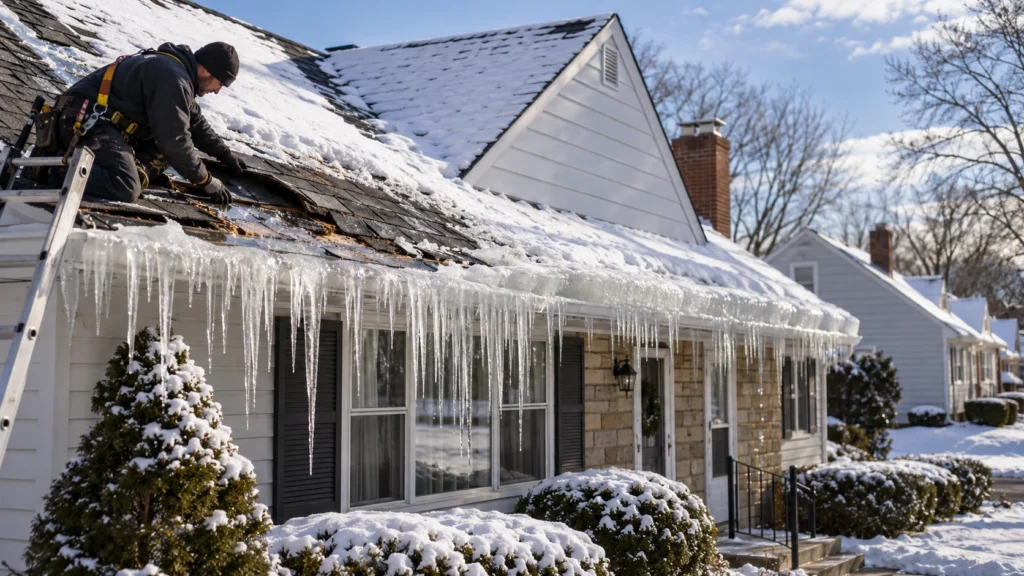
Freeze-Thaw and Ice Damming
This is a Bucks County specialty. When snow on your roof melts during the day and refreezes at night, it can form a ridge of ice at the eaves that traps water behind it. That trapped water backs up under the shingles and into the home. Even a small entry point becomes a recurring problem every cold snap.
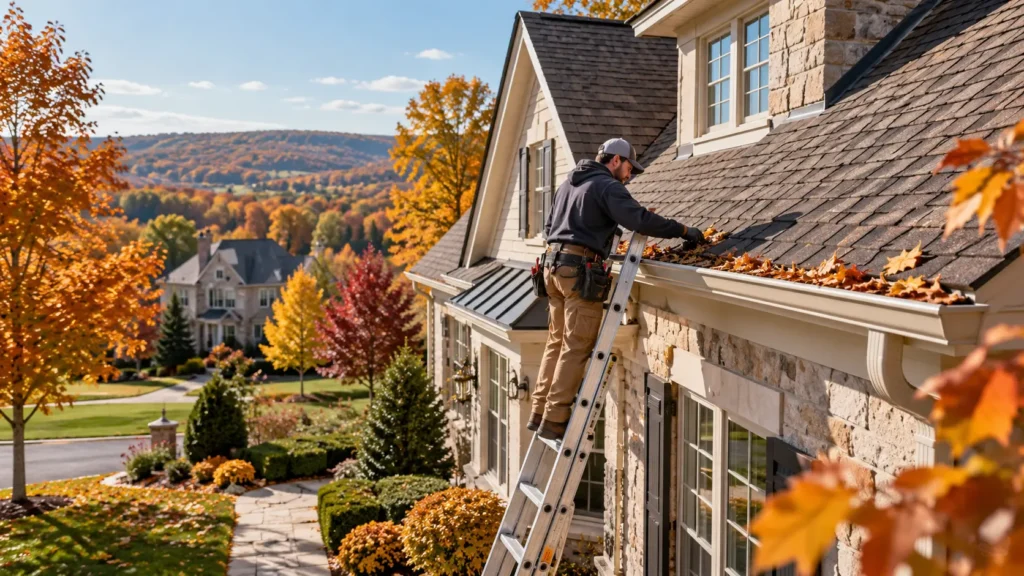
Clogged or Failing Gutters
People rarely connect their gutters to a roof leak, but they should. When gutters clog with leaves and debris, water backs up against the roof edge and works its way under the shingles and into the fascia. We’ve traced more than a few “roof leaks” straight back to a gutter problem.
The common thread? These causes don’t fix themselves, and they don’t stay contained. What most people don’t realize is that the leak you see is the end of the journey, not the start.
How to Tell If Your Leak Is Already Spreading
Use this quick self-check to gauge whether your small leak has already moved beyond the surface. The more boxes you’d check, the more urgent the situation.
- Check the ceiling stain. Has it grown, darkened, or changed shape since you first noticed it? A spreading stain means active, ongoing water movement.
- Press the drywall gently. Does it feel soft, spongy, or sag slightly? That’s saturated material that’s losing its structure.
- Look for more than one spot. Multiple stains, or stains in different rooms, suggest the water is traveling along beams and finding new exits.
- Smell for must. A persistent damp or earthy odor often means moisture is sitting in insulation or framing — the first step toward mold.
- Inspect the attic (safely). Bring a flashlight and look for damp wood, dark streaks on the underside of the roof deck, or matted insulation.
If you’re seeing soft drywall, multiple stains, or any sign of mold, it’s no longer a “watch and wait” situation. That’s the point where a professional inspection saves you from the much larger repair waiting down the road.
The True Cost Breakdown: What Waiting Actually Buys You
Here’s the honest answer to the question in the title — and it’s not a single number, because the real cost of ignoring a small leak is a cascade. One affordable problem quietly becomes several expensive ones. Here’s the chain we see play out, stage by stage.
Stage 1 — The leak itself. Caught early, the source is often a small, contained repair: resealing flashing, replacing a section of shingles, clearing a gutter. This is the cheapest moment to act, and it’s the one most people skip.
Stage 2 — The roof deck. Left alone, water soaks into the plywood decking beneath your shingles. Wet decking rots and weakens. Now the repair isn’t just the surface — it’s the structure underneath, which means more labor and more material.
Stage 3 — Insulation and framing. Water keeps traveling. It saturates attic insulation (which then stops insulating, raising your energy bills) and seeps into the wood framing of your home. Replacing insulation and treating framing turns a roofing repair into a bigger restoration job.
Stage 4 — Mold and air quality. Damp, dark spaces are exactly where mold thrives. Once it takes hold in insulation, drywall, or framing, you’re now looking at remediation — a separate specialty cost on top of the roofing fix, and a health concern for your family.
Stage 5 — Interior finishes. Finally, the damage you can actually see: ruined drywall, stained ceilings, peeling paint, warped trim. These all need to be torn out, replaced, and repainted.
That progression is why a five-figure project so often started as a leak the homeowner described to me as “barely anything.” The water never stops at the ceiling stain. Every season you wait, it claims more of the materials around it — and each new layer of damage adds its own line to the bill.
How to Stop the Damage Before It Compounds
The good news: caught early, a small leak is one of the most fixable problems in your home. Here’s how to think about your options.
What You Can Safely Do First
- Contain the interior damage. Place a bucket under any active drip and move valuables away from the area.
- Clear your gutters if they’re accessible and you can do it safely from a stable ladder. This rules out the most common DIY-fixable cause.
- Document everything. Photograph the stains and any attic dampness. This helps your roofer diagnose the source faster and supports an insurance claim if storm damage is involved.
What NOT to do: Don’t climb onto the roof yourself, especially when it’s wet, and don’t slather roofing tar or caulk over a suspected leak. Both are dangerous and, in my experience, almost always make the eventual professional repair harder and more expensive.
What a Professional Repair Includes
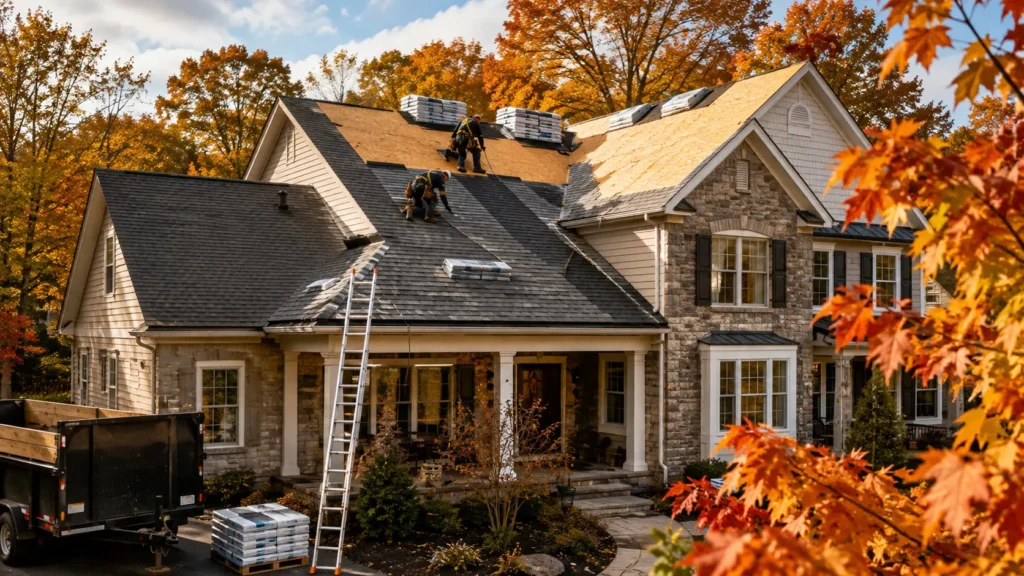
When you call a professional roofer, the real value is the diagnosis. At Rylee Ann Roofing, we inspect the entire roofing system — flashing, underlayment, decking, ventilation, and gutters — because a leak is only as fixed as its root cause. We trace water back to its actual entry point rather than patching the spot where it shows up inside.
From there, we walk you through exactly what we found and what it’ll take to fix it, in plain language, with a free, no-obligation estimate.
Why Acting Early Pays Off
Addressing a leak at Stage 1 means you’re paying for a repair, not a restoration. You also protect the things you can’t put a price on: your home’s structure, your indoor air quality, and your peace of mind. And every residential asphalt shingle repair we complete is backed by our 10-year leak-free workmanship warranty — so once it’s fixed, it stays fixed.
Why Bucks County Homeowners Choose Rylee Ann Roofing
For 30 years, I’ve been diagnosing and fixing roof leaks for families and businesses across Bucks County. Rylee Ann Roofing isn’t a general contractor that also does roofs — roofing is all we do, which means every member of our crew is a roofing specialist who knows how water actually moves through a roofing system.
Here’s what that means for you:
- Owner onsite, every job. I’m personally there to make sure the work is done right — not a rotating crew you’ve never met.
- Owens Corning Certified Installer with factory-trained crews.
- Licensed in PA (HIC #139247) and NJ (HIC #13VH10032900).
- 5-star Google rating with 50+ reviews and a Nextdoor Neighborhood Favorite recognition (2022).
- 10-year leak-free workmanship warranty and a 24-hour issue resolution policy — staunch company commitments, not suggestions.
- Rooted in the community we serve, from the Levittown-Fairless Rescue Squad to the Tullytown Fire Company and Bristol Borough Hall.
We understand Bucks County roofs because we understand Bucks County weather — the Nor’easters, the humid summers, and the freeze-thaw cycles that turn small leaks into big ones.
Frequently Asked Questions
Is a small roof leak really an emergency? Not always an emergency, but never something to ignore. A small leak rarely stays small — water spreads to decking, insulation, and framing over time. The safest move is a professional inspection to catch the cause before it compounds into a far larger repair.
What happens if you ignore a roof leak for too long? Ignored leaks follow a predictable path: rotted roof decking, ruined insulation, water-damaged framing, mold growth, and finally damaged ceilings and walls. Each stage adds cost and complexity, turning an affordable repair into a much larger restoration project.
Can I fix a small roof leak myself? You can safely clear gutters and contain interior dripping, but you shouldn’t climb onto your roof or apply tar or caulk over a leak. DIY patches usually cover the symptom, not the source, so the leak returns — often worse. A professional traces water to its actual entry point.
How much does small roof leak repair cost in Bucks County? Costs vary widely based on the source and how far the damage has spread. A leak caught early is an affordable, contained repair; one left for months can become a five-figure restoration. The best way to know is a free, no-obligation estimate from a licensed roofer.
What causes most roof leaks? The most common causes we find are failed flashing around chimneys, vents, and skylights; worn or aged shingles; freeze-thaw ice damming; and clogged gutters that back water up under the roof edge. Many leaks come from these areas rather than obvious missing shingles.
How do I know if my leak has spread beyond the ceiling? Watch for a growing or darkening stain, soft or spongy drywall, multiple stains in different rooms, a persistent musty smell, or damp insulation and dark streaks in the attic. Any of these signs means water is actively traveling and a professional inspection is overdue.
When should I call a professional roofer in Bucks County? Call as soon as you notice a stain, drip, or musty smell — ideally before the next storm. Early diagnosis is dramatically cheaper than restoration. At minimum, schedule an inspection if you see soft drywall, multiple stains, or any sign of mold.
Does homeowners insurance cover roof leak damage? It often depends on the cause. Sudden storm damage is more commonly covered than gradual wear or neglect — which is another reason not to wait. Documenting the damage with photos early helps your claim, and we coordinate with insurance companies on storm-related repairs.
Next Steps
That faint ceiling stain is your roof asking for help while the fix is still simple. Here’s what to remember:
- A small leak is the end of the water’s path, not the start — the real damage is happening where you can’t see it.
- Waiting doesn’t save money; it trades an affordable repair for a multi-stage restoration.
- The most valuable thing a professional brings is finding the true source, not just patching the spot.
- Caught early, a leak repair is backed by our 10-year leak-free workmanship warranty.
Don’t let another storm pass over an unaddressed leak. Call Rylee Ann Roofing at 833-691-7663 or request your free, no-obligation estimate online. Ask about our free Roofing Report Card — it tells you whether you’re looking at a simple repair or something more, with no pressure either way.
We respond within 24 hours and serve homeowners throughout Bucks County PA, Lehigh County PA, Mercer County NJ, and Burlington County NJ. Hours: Mon–Fri 7am–5pm, Sat 7am–12pm.
About the Author
Steve Nickerson is the Estimator and Principal at Rylee Ann Roofing, with 30 years of hands-on experience in residential and commercial roofing. He specializes in roof leak diagnostics, storm damage assessment, and full roofing system evaluation. Steve is a licensed contractor in Pennsylvania (HIC #139247) and New Jersey (HIC #13VH10032900) and an Owens Corning Certified Installer who personally oversees every Rylee Ann Roofing project. He’s proud to help Bucks County families protect their homes — and to stand behind every repair with a 10-year leak-free workmanship warranty.